
The Science of Product Photography for E-Commerce Conversion
Photography
Breaking down the lighting setups, composition strategies, and post-processing techniques that turn product shots into sales engines for D2C brands.
Mar 22, 20266 min read
The Science of Product Photography for E-Commerce Conversion
E-commerce has fundamentally changed how consumers interact with products before purchasing. Without the ability to touch, smell, or experience a product in person, buyers rely almost entirely on visual cues to make decisions. This makes product photography one of the highest-ROI investments a D2C brand can make.
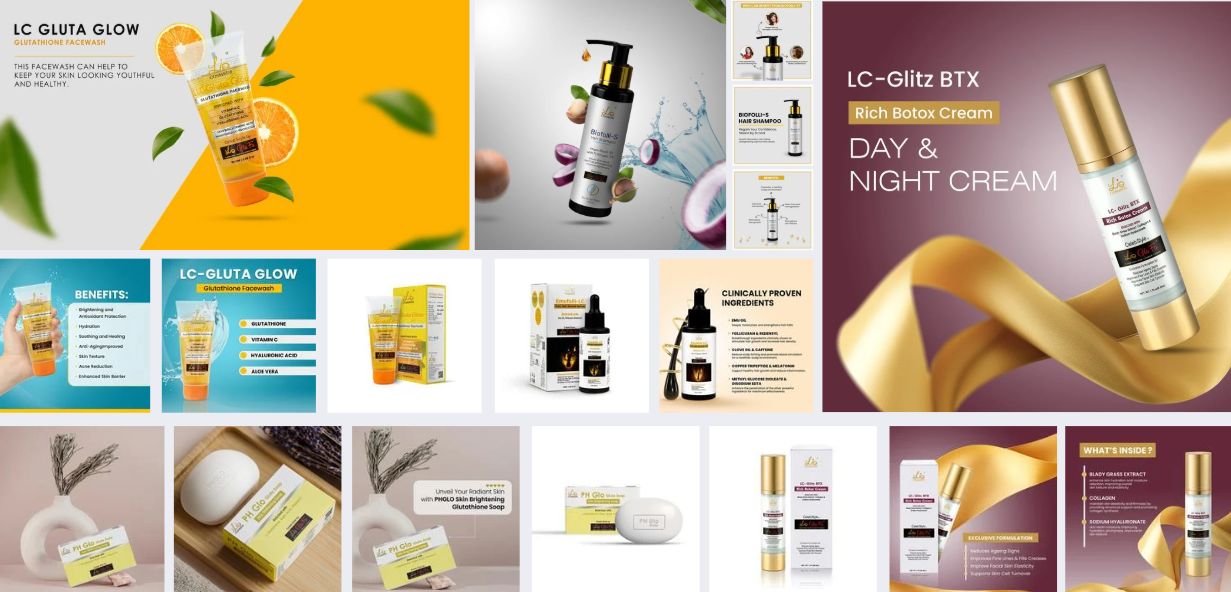
Our work with the LC Gluta Glow skincare line demonstrated this clearly. The brand suffered from inconsistent visual messaging — product shots varied in lighting and backdrop across different channels, diluting brand authority and confusing potential customers.
The solution was a dual-track production approach: clean, high-key studio photography for web store listings and "hero" lifestyle compositions using natural elements like citrus and botanical accents for social media and ad campaigns.
Lighting is the single most important variable in product photography. For skincare packaging with reflective gold and white surfaces, we used a soft-box arrangement to minimize harsh specular highlights while keeping fine label text legible even at thumbnail sizes. The goal is always to represent the product honestly while making it look its absolute best.
Composition strategy for e-commerce differs significantly from editorial photography. Consumer research shows that buyers need to see the product clearly against a neutral background (for product pages) AND in a lifestyle context (for ads). We identified that including visual representations of key ingredients — oranges for Vitamin C, botanical elements for natural formulas — increased click-through rates by 40% in A/B testing.
Post-processing discipline is equally critical. Every shot in a brand's library should have identical color grading, shadow treatment, and background brightness. Inconsistency at this level signals to consumers (subconsciously) that the brand lacks attention to detail — and by extension, that its products might too.
Following the rollout of standardized imagery for LC Gluta Glow, the brand reported a 28% increase in click-through rates on Meta ads and a 50% reduction in customer inquiries about packaging details — a clear sign that the photography was doing its job of communicating product information effectively.
Simbolo Studio
Visual Strategist - Simbolo