
The Power of 3D Visualization in Modern Product Marketing
3D & CGI
How CGI and photorealistic rendering are replacing traditional photography for premium product brands — and why the numbers make it an obvious choice.
Mar 28, 20265 min read
The Power of 3D Visualization in Modern Product Marketing
In an era where consumers make purchasing decisions in seconds, the visual quality of your product imagery can make or break a sale. Traditional photography, while effective, comes with significant constraints — expensive studio rentals, logistical challenges, and an inability to easily iterate on creative direction.
This is where 3D visualization and CGI (Computer-Generated Imagery) step in as a game-changing alternative.
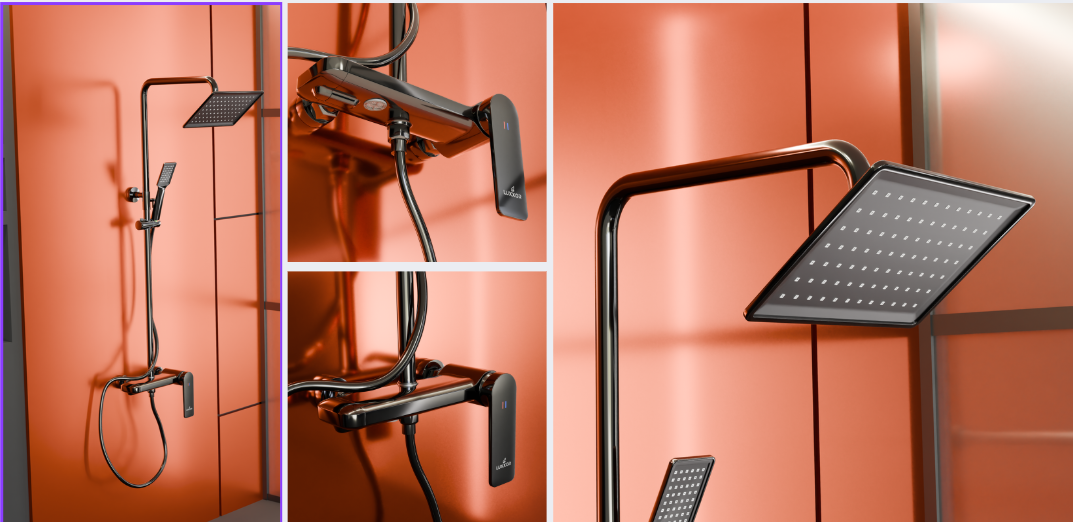
For our work with Luxxor ABK on their matte black shower series, the challenge was twofold: capturing the subtle texture of matte finishes without overexposure, and managing complex reflections on chrome components. Physical photography simply couldn't solve this at a reasonable cost. A CGI-first workflow allowed us to build a high-topology digital twin of the product and render it under perfectly controlled conditions.
The business case is compelling. Our client saved approximately 70% in production costs by eliminating physical set builds. More importantly, the digital assets are infinitely reusable — a single high-polygon model can generate thousands of variations in lighting, environment, and angle without ever going back to a studio.
For brands operating in premium categories — sanitaryware, furniture, electronics, fashion accessories — CGI renders are now indistinguishable from photography at a fraction of the cost. The technology has matured to the point where Physically Based Rendering (PBR) shaders can replicate the exact behavior of light on any material, from brushed aluminum to frosted glass.
If your product line requires visual marketing at scale, 3D visualization isn't just a creative option — it's a strategic imperative.
Simbolo Studio
Creative Director - Simbolo